
 Tiếng Việt
 English
 中文
中文

Media guide
5 TRUTHS ABOUT BRAND ROI TO OPTIMIZE EVERY DOLLAR OF MARKETING BUDGET (PART 1)
Last updated: 16 Mar 2026Against a macroeconomic backdrop of slowing global GDP growth and gradually recovering consumer confidence, marketing investment is facing unprecedented challenges: consumers’ purchase decision journeys are becoming longer, price sensitivity is increasing, traffic costs continue to rise, and channel fragmentation is becoming increasingly severe.
At the same time, corporate marketing budgets continue to be cut. Research data shows that in recent years, globally, the proportion of marketing budgets relative to companies’ total revenue has declined by an average of 14% or more. Faced with such a challenging environment and increasingly constrained budgets, how can marketers find a way forward?
Kantar used its specialized marketing database, LiftROI, to track the long-term marketing investments of more than 500 brands across industries including automotive, technology, food, personal care, financial services, retail, travel, and luxury. From this analysis, Kantar summarized five key truths about marketing investment, providing valuable strategic direction for businesses seeking growth breakthroughs amid intensifying competition for Market Share.
Truth 1: Short-Term Marketing Typically Contributes Only 10–30% of Sales; Brand Building Is the Driver of Long-Term Growth
Under pressure to reduce costs and improve efficiency, a common strategy among brands is to cut Brand Advertising budgets — whose effectiveness can be more difficult to measure — and shift investment toward Performance Advertising that can generate short-term sales conversions.
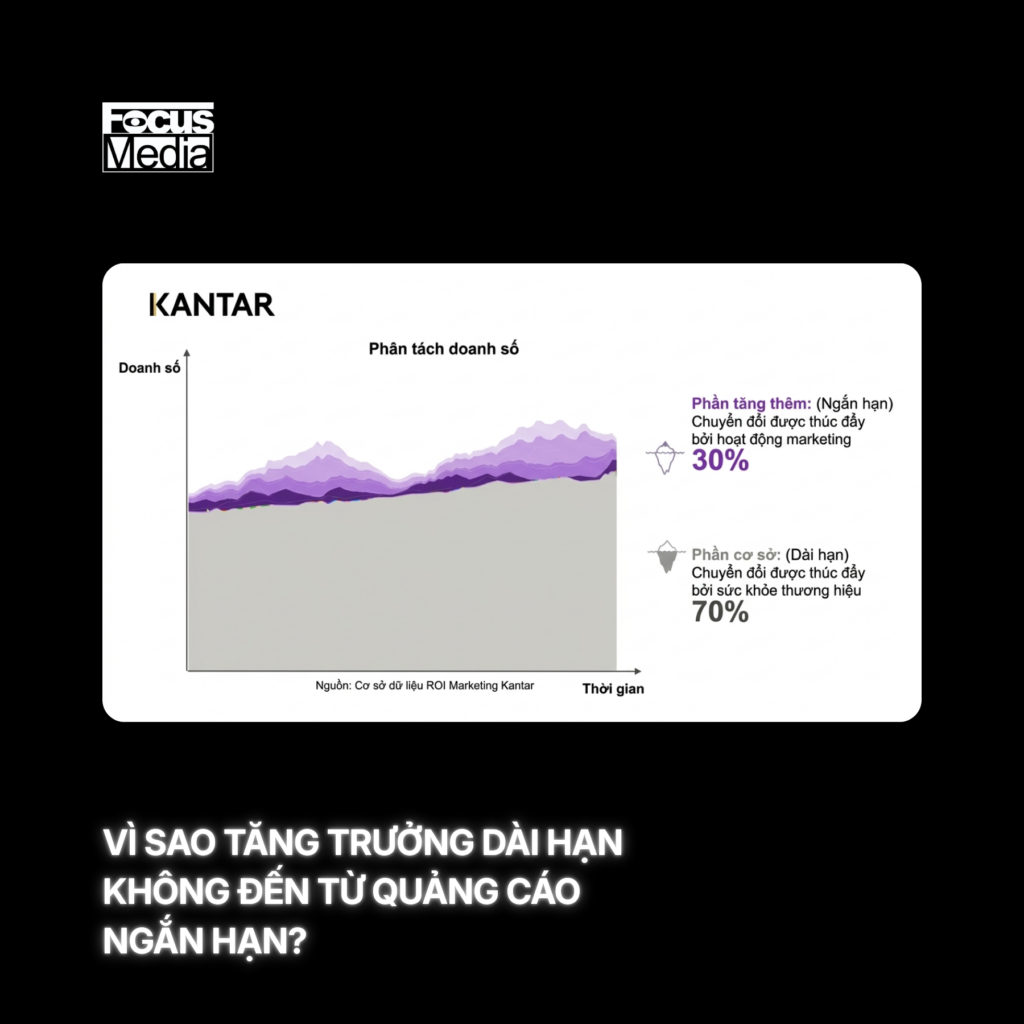
However, the reality is that short-term marketing (Performance Advertising) typically contributes only 10–30% of sales, while more than 70% of sales growth comes from previously accumulated Brand Equity.
Viewed over a longer time horizon, sustainable sales growth fundamentally depends on the accumulation of Brand Equity.
The brand itself is the core engine driving growth, and the long-term development of Brand Equity plays a decisive role in increasing Market Share.
Truth 2: The “Golden Ratio” for Marketing Budgets Is 50:50 (Brand : Performance)
Even when businesses clearly recognize the strategic value of Brand Advertising, allocating budgets between Brand Advertising and Performance Advertising remains a difficult challenge.
Overemphasizing Brand while underinvesting in Performance can lead to weak short-term conversion and place pressure on cash flow.
Conversely, overemphasizing Performance while neglecting Brand can create a vicious cycle: Customer Acquisition Costs continue to rise while the business gradually loses the momentum required for future growth.
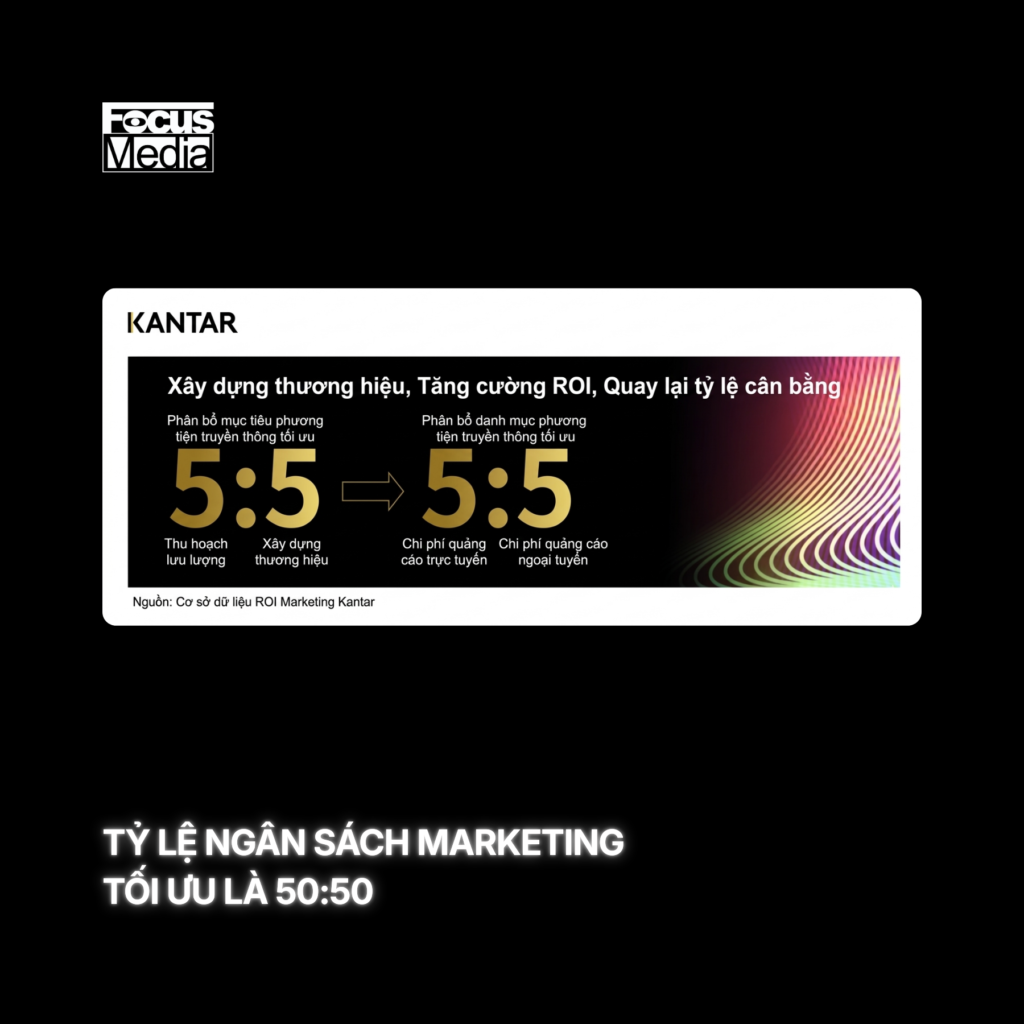
Through data modeling and analysis, Kantar indicates that when businesses maintain a 50:50 budget allocation between Brand Building and Performance Advertising, they can often achieve a dynamic balance between long-term growth and short-term conversion.
Brand Advertising is responsible for shaping consumer perceptions and increasing the baseline level of sales generated through organic traffic.
Performance Advertising focuses on immediate conversion, rapidly expanding sales volume.
This dual strategy — “securing conversion today while accumulating momentum for the long term” — is a key growth mechanism for navigating different market cycles.
Truth 3: If Brand Advertising Stops, Brand Awareness Will Decline!
If marketing budgets become overly concentrated on channels with high short-term ROI while Brand Building is neglected, the result can be latent damage to Brand Equity and weaker long-term growth.
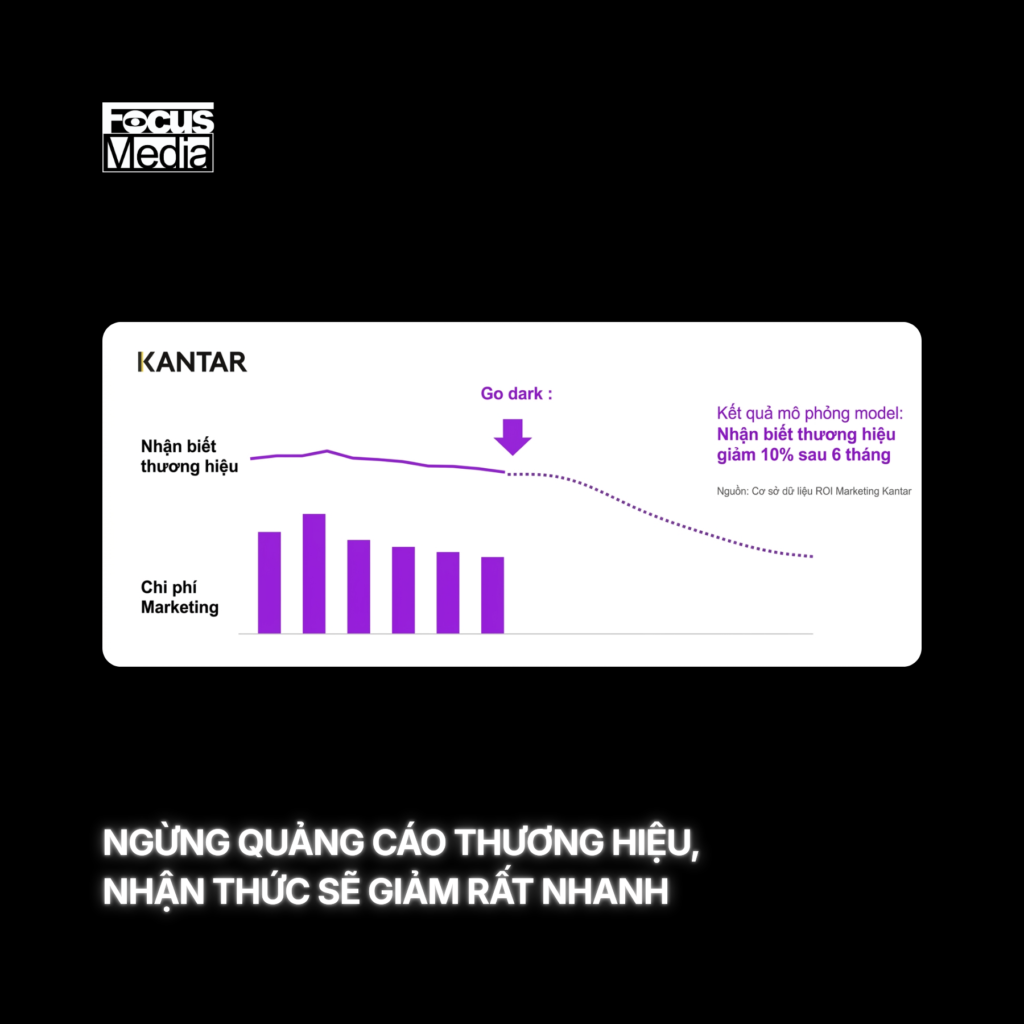
Analysis from Kantar’s marketing ROI database shows that after six months without Brand Advertising, Brand Awareness can decline by 10–20%.
A decline in market awareness can directly reduce the brand’s baseline sales while simultaneously increasing Customer Acquisition Costs for Performance Advertising.
Ultimately, marketing investment can fall into a vicious cycle:
“Declining perceptual value → rising conversion costs → further cuts to Brand budgets.”
Only through continuous investment in Brand Equity and by increasing the brand’s Share of Mind among consumers can businesses establish the fundamental conditions for healthy and sustainable brand growth.


Comment (0)
Related News



 Contact
Let Focus Media Vietnam
Bring your brand into urban life
Share your campaign objectives. Focus Media Vietnam will advise on how your brand can appear at relevant touchpoints within the building and connect viewers to landing pages, e-commerce platforms, apps, or digital content.

No comments yet. Be the first to share your thoughts.